Summary
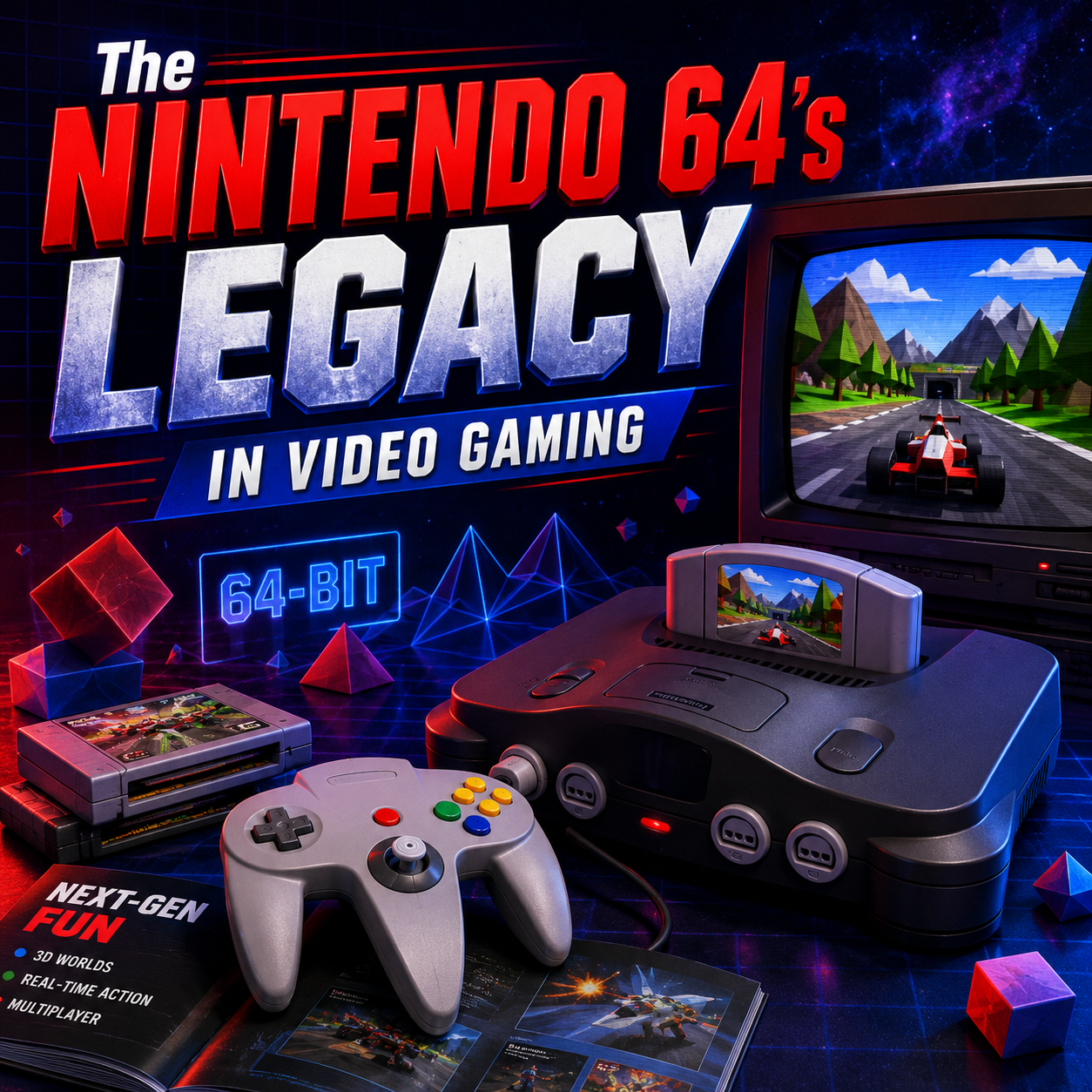
The Nintendo 64 is one of the most important consoles in video game history, not because it sold the most units, but because it helped define how 3D gaming would feel for generations. Released in North America in 1996, the N64 pushed console gaming into a new era with analog control, bold 3D worlds, four-player multiplayer, rumble feedback, and some of the most influential games ever made. Nintendo reports lifetime sales of 32.93 million N64 systems and 224.97 million pieces of N64 software worldwide, which puts it behind the original PlayStation commercially, but its impact on game design is massive.
From Super Mario 64 and The Legend of Zelda: Ocarina of Time to GoldenEye 007, Mario Kart 64, Super Smash Bros., Banjo-Kazooie, Perfect Dark, and Star Fox 64, the Nintendo 64 helped shape 3D platformers, adventure games, console shooters, local multiplayer, and the way players interacted with games. Even today, collectors, retro gamers, speedrunners, and nostalgic players still return to the N64 because its best games remain fun, strange, bold, and unmistakably Nintendo.

Why the Nintendo 64 Still Matters
The Nintendo 64 is one of those consoles that feels bigger than its sales numbers. It was not the best-selling console of its generation, and it was not perfect. The cartridge format had limitations. Third-party support was weaker than Nintendo probably wanted. Some games aged beautifully, while others look like they were built out of fog, triangles, and pure optimism.
And yet, the N64 still matters.
It matters because it arrived during one of the most important transitions in video game history: the move from 2D to 3D. Before the mid-1990s, most console gamers understood video games through side-scrolling levels, overhead maps, sprites, tiles, and fixed viewpoints. Then suddenly, games had space. Real space. You could run around a castle courtyard. You could circle an enemy. You could aim down a hallway. You could race around a 3D track with three friends on the same couch.
The Nintendo 64 did not invent 3D gaming, but it helped make 3D gaming understandable, playable, and exciting for millions of home console players.
That is the real legacy of the N64. It taught players how to move in 3D, and it taught developers how to build games around that movement.

From Project Reality to the Nintendo 64
Before it became the Nintendo 64, the system was part of a much-hyped project between Nintendo and Silicon Graphics. The project was known as “Project Reality,” and it was announced in the early 1990s as an ambitious attempt to bring powerful 3D graphics technology into the home console market.
That name sounds wonderfully ridiculous now, but it also tells you exactly what Nintendo was chasing. The company was not simply trying to make a stronger Super Nintendo. It was trying to create a console that could make games feel more dimensional, more cinematic, and more alive.
By the time the Nintendo 64 launched in North America on September 29, 1996, the industry had already changed dramatically. Sony’s PlayStation was gaining momentum. Sega’s Saturn was on shelves. CD-based gaming was becoming the new standard. Nintendo, being Nintendo, chose a different path and stuck with cartridges.
That decision shaped the entire identity of the N64.
The Cartridge Decision: Brilliant and Frustrating
One of the biggest debates around the Nintendo 64 has always been its use of cartridges instead of CDs.
On the positive side, cartridges were fast. N64 games did not suffer from the same loading screens that were common on disc-based systems. They were durable, harder to pirate, and gave Nintendo more control over manufacturing.
On the negative side, cartridges were expensive to produce and had far less storage capacity than CDs. That mattered a lot in the late 1990s. Developers wanted more room for full-motion video, CD-quality audio, voice acting, larger worlds, and cinematic presentation. The PlayStation’s disc format made those things easier and cheaper.
This is one of the reasons the N64 library feels so different from the PlayStation library. The PlayStation became home to massive RPGs, cinematic horror, experimental third-party releases, and music-heavy games. The N64 leaned harder into fast-loading arcade-style play, Nintendo’s first-party magic, Rare’s technical wizardry, and multiplayer experiences.
In hindsight, the cartridge choice was both one of the N64’s biggest strengths and one of its biggest weaknesses. Very Nintendo. Very stubborn. Very iconic.
The Controller That Changed Everything
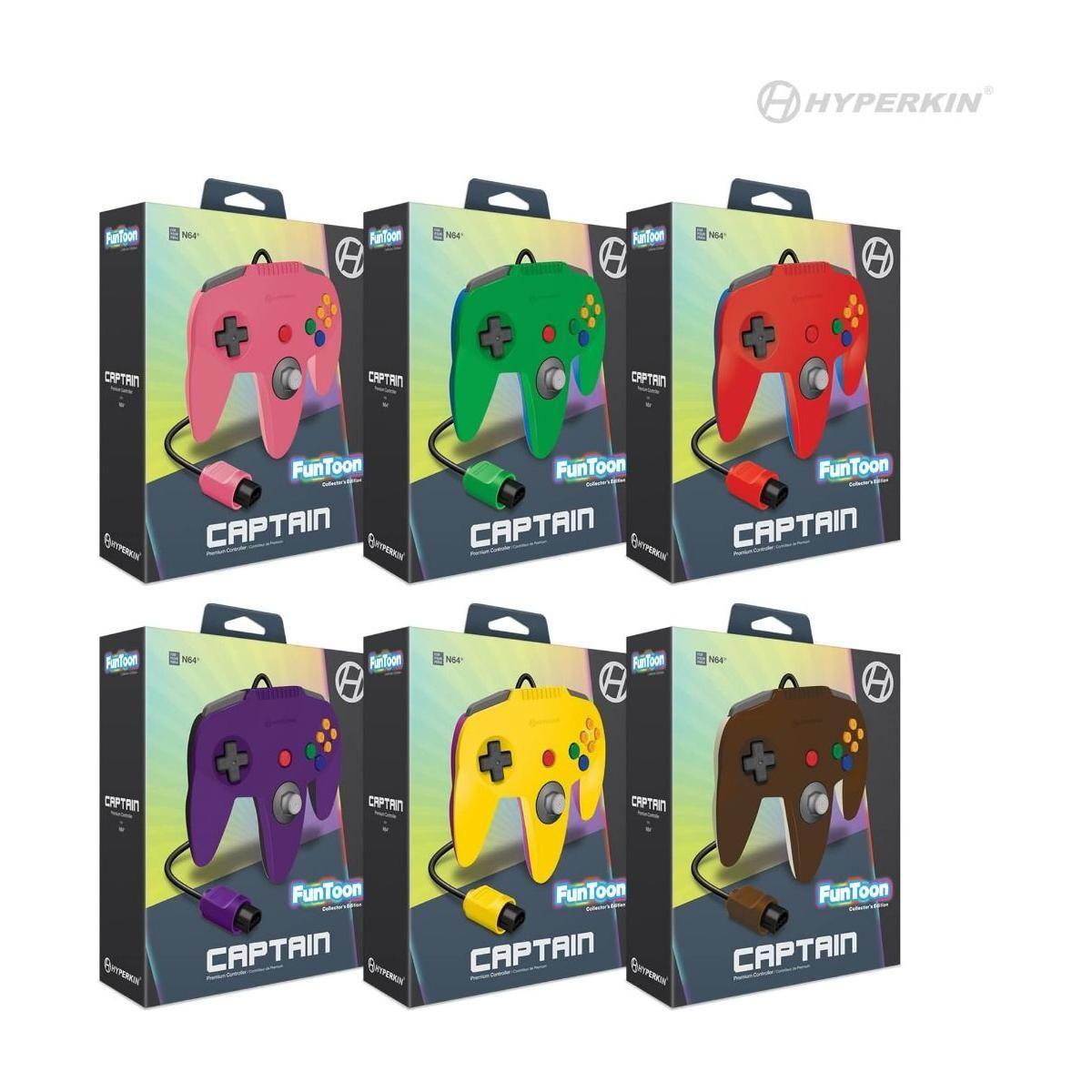
The Nintendo 64 controller is one of the strangest mainstream controllers ever made. Three handles. One analog stick in the middle. A Z trigger underneath. Yellow C-buttons. A slot for accessories. It looked like a spaceship had mated with a boomerang.
But as weird as it looked, it was built around a problem every console manufacturer had to solve: how do you control a character in a 3D space?
The analog stick was the key. Instead of moving in only eight directions with a D-pad, players could walk, run, tiptoe, curve, and adjust movement with more precision. That mattered enormously in games like Super Mario 64, where movement itself was the heart of the experience.
The Z trigger also helped define the feel of the system. It became a natural button for aiming, crouching, targeting, and interacting in ways that felt different from older 2D games. Meanwhile, the C-buttons were often used for camera control, item selection, or secondary actions.
Was the controller perfect? Absolutely not. The analog sticks wore down. The layout confused new players. Some games used the controller brilliantly, while others felt like they were trying to solve a puzzle with oven mitts on.
But the N64 controller helped establish the idea that 3D games needed analog control. That idea became standard. Modern controllers are far more refined, but the N64 was one of the major stepping stones.

Super Mario 64: The Game That Explained 3D
If the Nintendo 64 had launched without Super Mario 64, the console’s story would be completely different.
Super Mario 64 did more than bring Mario into 3D. It explained how 3D movement should feel. Players could run, jump, crawl, climb, swim, slide, triple jump, wall kick, long jump, backflip, and explore open areas with a freedom that felt wild at the time.
The genius of Super Mario 64 was not just that it was 3D. Lots of games were trying to be 3D. The genius was that moving Mario around was fun before you even started chasing objectives.
Princess Peach’s Castle became a hub world filled with secrets, paintings, locked doors, hidden stars, and strange little discoveries. The levels were not just obstacle courses. They were playgrounds. You could approach goals in different orders. You could experiment. You could mess around and still feel like you were getting better.
That design philosophy still echoes through modern games. Open hubs, collectible objectives, movement-based mastery, free camera systems, and 3D platforming structure all owe a lot to what Super Mario 64 proved.
It was not just a launch title. It was a blueprint.
Ocarina of Time and the Language of 3D Adventure Games
If Super Mario 64 taught players how to move through 3D space, The Legend of Zelda: Ocarina of Time taught players how to adventure through it.
Released in 1998, Ocarina of Time brought The Legend of Zelda into 3D with a world that felt huge, mysterious, cinematic, and emotionally powerful. It introduced systems that became deeply influential, including Z-targeting and context-sensitive actions. Z-targeting allowed Link to lock onto enemies or points of interest, helping solve the problem of combat in 3D space. Context-sensitive buttons allowed one button to do different things depending on what Link was near or doing, which kept the controls cleaner and more intuitive.
Those ideas mattered. A lot.
Without systems like Z-targeting, early 3D combat could feel clumsy and chaotic. Ocarina of Time made sword fighting, blocking, dodging, aiming, and interacting with the environment feel manageable. It gave players a way to focus inside a 3D world.
It also showed how cinematic a 3D adventure could be without abandoning gameplay. The music, dungeons, time travel, boss fights, horse riding, and emotional shift from child Link to adult Link gave the game a sense of scale that felt enormous in 1998.
There is a reason Ocarina of Time is still discussed as one of the greatest games ever made. It did not simply become a great Zelda game. It helped shape the grammar of 3D action-adventure design.
GoldenEye 007 and the Birth of Console Shooter Nights
Before GoldenEye 007, first-person shooters were mostly associated with PCs. Console shooters existed, of course, but they did not dominate living rooms the way they eventually would.
Then GoldenEye 007 happened.
Released in 1997, GoldenEye 007 became one of the N64’s defining games. Its single-player campaign was impressive, with mission objectives, stealth elements, memorable levels, and a strong sense of place. But the multiplayer mode is what turned it into a cultural event.
Four players. One screen. No online connection. No updates. No matchmaking. Just friends on a couch, yelling at each other for screen-looking while someone picked Oddjob and ruined the entire social contract.
The N64’s four controller ports were a huge part of that magic. You did not need a multitap. You did not need extra hardware. The console was ready for four-player chaos right out of the box. Nintendo still leans into that “old-school fun” legacy when promoting classic N64 multiplayer experiences through its modern Nintendo Switch Online offerings.
GoldenEye 007 helped prove that first-person shooters could work on consoles and that local multiplayer could turn a game into a social ritual. In 2025, GoldenEye 007 was inducted into the World Video Game Hall of Fame, with The Strong recognizing its influence on multiplayer console shooters.
That is not nostalgia talking. That is legacy.

Mario Kart 64, Smash Bros., and the Couch Multiplayer Era
The N64 was arguably one of the greatest couch multiplayer consoles ever made.
Mario Kart 64 took the already-brilliant formula from the Super Nintendo and pushed it into 3D. The tracks were more open, the races felt faster, and the four-player split-screen mode made it a staple at sleepovers, parties, basements, dorm rooms, and family gatherings.
Super Smash Bros. started as a strange little crossover fighting game and became one of Nintendo’s most important franchises. The original N64 game was simpler than its sequels, but the foundation was there: easy to learn, chaotic in the best way, packed with Nintendo characters, and built around the joy of knocking your friends off the stage.
Then there was Mario Party, a game that taught an entire generation that friendship is fragile and Nintendo has no problem destroying it one stolen star at a time.
The N64 understood something that modern gaming sometimes forgets: playing together in the same room is a different kind of magic. Online multiplayer is amazing, but couch multiplayer has body language, yelling, laughter, revenge, snacks, and immediate consequences.
The N64 did not just support multiplayer. It celebrated it.
Rare’s Golden Era on Nintendo 64
You cannot talk about the Nintendo 64’s legacy without talking about Rare.
Rare was on an unbelievable run during the N64 era. The studio delivered games that helped define the console’s identity, including GoldenEye 007, Banjo-Kazooie, Diddy Kong Racing, Perfect Dark, Jet Force Gemini, Killer Instinct Gold, Conker’s Bad Fur Day, and Donkey Kong 64.
Rare’s games often pushed the hardware harder than seemed reasonable. Banjo-Kazooie refined the 3D collect-a-thon platformer with personality, charm, music, and level design that still feels warm and clever today. Perfect Dark expanded on the ideas of GoldenEye with bots, deeper multiplayer options, sci-fi storytelling, and more ambitious design. Conker’s Bad Fur Day took the cute mascot platformer formula and gleefully smashed it with adult humour, parody, and technical showmanship.
Rare gave the N64 some of its edge. Nintendo brought the polish and the icons. Rare brought the attitude, experimentation, and “how did they fit this on a cartridge?” energy.
For collectors today, Rare’s N64 library remains one of the strongest reasons to own the console.
Star Fox 64, Rumble, and Physical Feedback
Star Fox 64 deserves special mention because of the Rumble Pak.
The Rumble Pak added force feedback to the N64 controller, letting players feel impacts, explosions, crashes, and action through vibration. Star Fox 64 helped introduce many players to this feature, and rumble eventually became a standard part of modern controller design.
That is easy to take for granted now. Today, vibration, haptics, adaptive triggers, and controller feedback are normal. But on the N64, feeling the controller shake during gameplay was memorable. It made the game feel more physical. It connected the player to the action in a new way.
The N64 was full of these ideas. Not all of them were perfect, but many of them pointed toward the future.
The Expansion Pak and Late-Generation Ambition
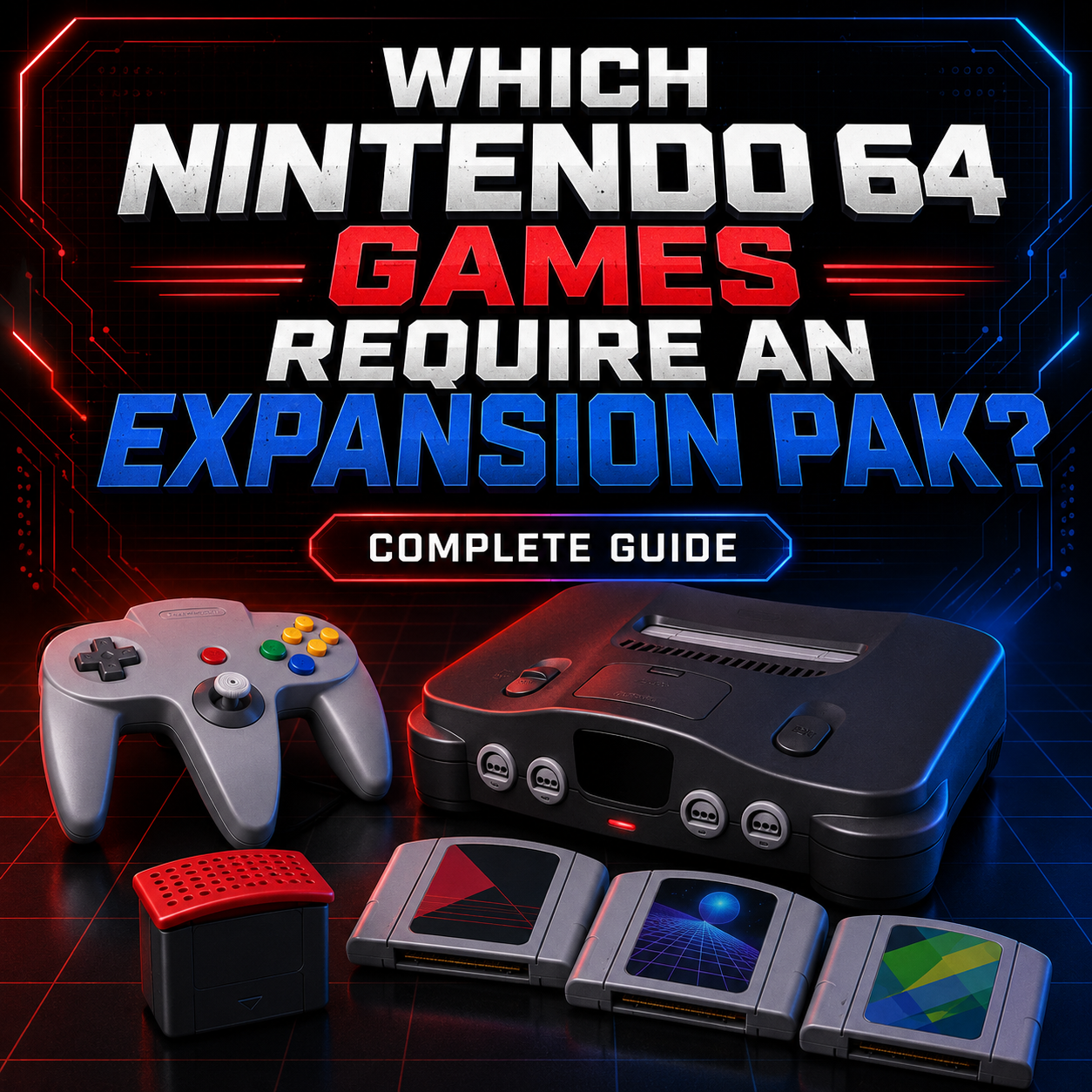
The Nintendo 64 also experimented with hardware upgrades through the Expansion Pak, which increased the system’s RAM from 4MB to 8MB. Some games used it for higher-resolution modes or improved visuals, while a small number required it.
The most famous Expansion Pak-required game is Donkey Kong 64. The Legend of Zelda: Majora’s Mask also required it, using the extra memory to support its more complex world, characters, and time-based systems. Perfect Dark could technically run without it, but major parts of the game required the Expansion Pak, including the campaign.
This was a fascinating part of the N64’s life. Nintendo was trying to stretch the system further instead of replacing it immediately. The Expansion Pak gave certain late-generation games more room to breathe, and it helped titles like Majora’s Mask and Perfect Dark feel more ambitious.
For modern collectors, it is also one of the most important accessories to check for when buying an N64. Some of the best games either require it or benefit from it.
The N64 Library Was Smaller, But It Had Personality
Compared to the PlayStation, the Nintendo 64 had a much smaller library. But what it lacked in size, it often made up for in personality.
The N64 library is weird in the best way. It has wrestling games that are still beloved today. It has arcade racers, snowboarding games, futuristic racers, Pokémon stadium battles, party games, platformers, shooters, sports games, puzzle games, and some wonderfully strange licensed titles.
A few highlights include:
Super Mario 64
The Legend of Zelda: Ocarina of Time
The Legend of Zelda: Majora’s Mask
GoldenEye 007
Perfect Dark
Mario Kart 64
Super Smash Bros.
Banjo-Kazooie
Banjo-Tooie
Diddy Kong Racing
Star Fox 64
Paper Mario
F-Zero X
Wave Race 64
1080° Snowboarding
Pokémon Stadium
Pokémon Snap
Mario Party
Mario Tennis
Mario Golf
Donkey Kong 64
Conker’s Bad Fur Day
WWF No Mercy
WCW/nWo Revenge
Turok: Dinosaur Hunter
Turok 2: Seeds of Evil
That list shows the N64’s range. It was not just the Mario and Zelda machine, even though those games are obviously huge parts of its identity. It was also a console for multiplayer mayhem, experimental 3D worlds, wrestling fans, racing fans, Pokémon kids, shooter fans, and collectors who love the odd corners of gaming history.
How the Nintendo 64 Influenced Modern Gaming
The N64’s fingerprints are everywhere.
Modern 3D platformers still borrow ideas from Super Mario 64. Modern action-adventure games still use concepts that Ocarina of Time helped popularize. Local multiplayer games still chase the energy of Mario Kart 64, GoldenEye 007, and Super Smash Bros. Controller rumble is now standard. Analog movement is essential. Camera control is one of the most important parts of 3D game design.
The N64 also helped prove that game feel matters. Not just graphics. Not just story. Not just power.
How does it feel to move?
How does it feel to jump?
How does it feel to aim?
How does it feel to race, fight, explore, and compete?
That focus on feel is one of Nintendo’s greatest strengths, and the N64 era is packed with examples of it.

Why Collectors Still Love the Nintendo 64
The Nintendo 64 remains a collector favourite for several reasons.
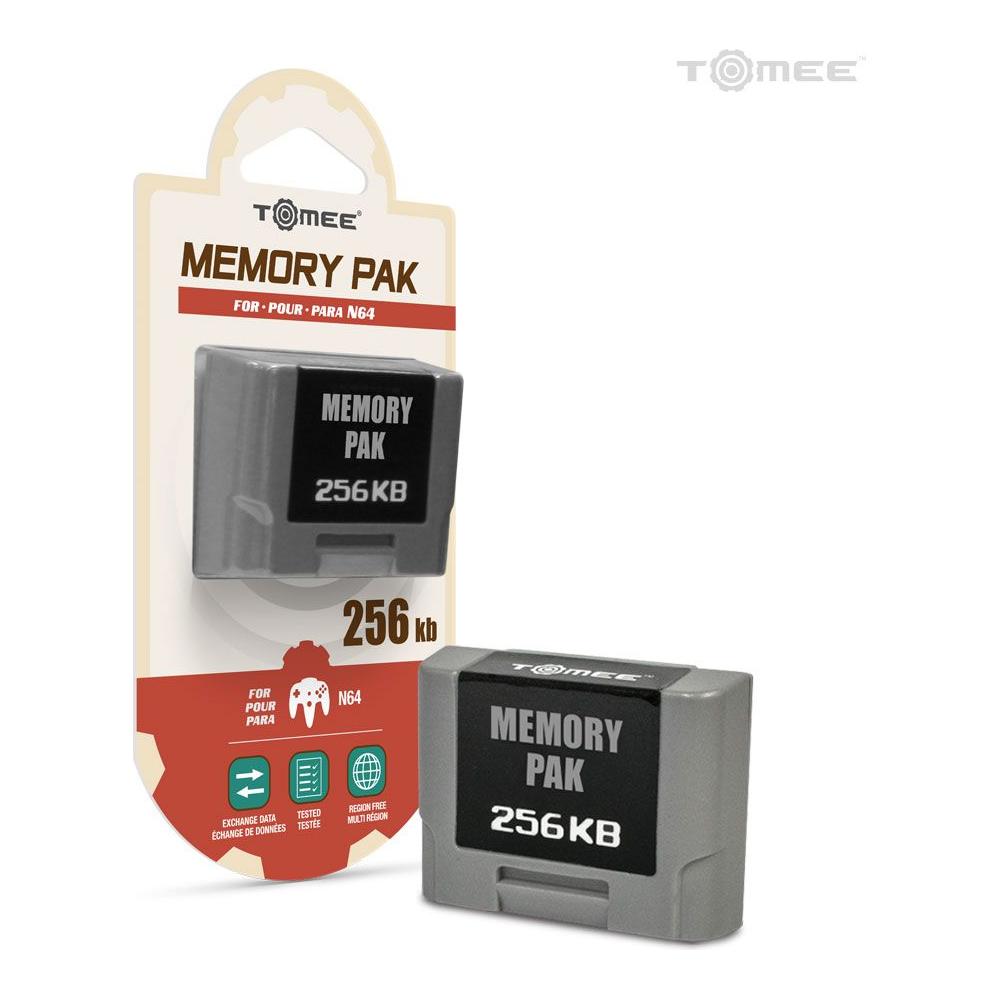
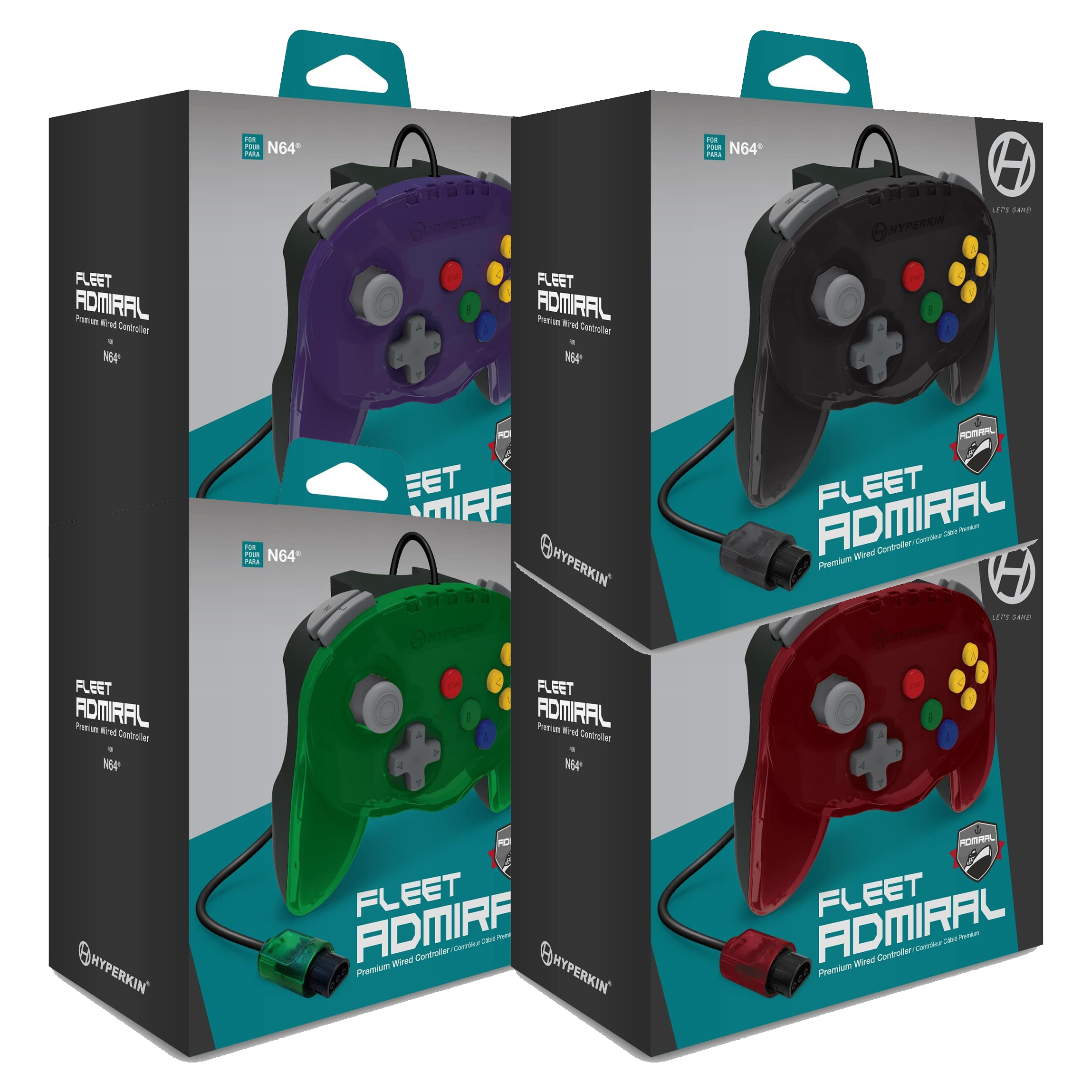
First, the cartridges are durable and satisfying to collect. There is something physical and nostalgic about N64 cartridges that discs do not quite replicate. The labels, coloured variants, grey carts, gold carts, expansion accessories, memory cards, rumble paks, transfer paks, and controller colours all make the system fun to hunt for.
Second, the multiplayer games are still easy to enjoy. You can plug in four controllers and have a good time almost immediately. That makes the N64 a fantastic party console even decades later.
Third, the library has strong replay value. Games like Mario Kart 64, Smash Bros., GoldenEye, Perfect Dark, F-Zero X, and WWF No Mercy are built for repeat play. Others, like Ocarina of Time, Majora’s Mask, Banjo-Kazooie, and Paper Mario, remain favourites for players who want a deeper single-player experience.
Finally, the N64 sits in a sweet spot for nostalgia. It is old enough to feel retro, but modern enough that many of its best ideas are still recognizable to current players.
Buying Nintendo 64 Games and Consoles Today
If you are buying a Nintendo 64 today, condition matters.
With consoles, you want to check that the system powers on properly, reads games reliably, and includes the correct Jumper Pak or Expansion Pak. The controller is especially important because loose analog sticks are extremely common. A worn N64 stick can make games feel awful, especially games that rely on precise movement like Super Mario 64, GoldenEye 007, or Ocarina of Time.
With games, you want authentic cartridges with clean labels, clean contacts, and tested functionality. N64 games have become increasingly collectible, and certain titles have climbed significantly in price over the years. Authenticity matters, especially with higher-value games.
At Power Up Gaming, we understand that retro gaming is not just about grabbing the cheapest copy you can find. It is about buying games and hardware that have been checked, cleaned, tested, and handled by people who actually understand the hobby. Whether you are rebuilding a childhood collection, buying your first N64, replacing a worn controller, or hunting down a specific title, Power Up Gaming is a great place to shop for Nintendo 64 games, consoles, and accessories.
You can browse online at PowerUpGaming.ca or visit us in-store in Barrie, Ontario.

The Nintendo 64’s Legacy Is Bigger Than Nostalgia
It is easy to look at the Nintendo 64 through nostalgia goggles. For many players, it was sleepovers, birthday parties, basement tournaments, Blockbuster rentals, Pokémon obsession, and yelling at your friends during GoldenEye.
But the N64’s legacy is bigger than nostalgia.
It helped define 3D movement. It helped shape 3D adventure games. It made four-player local multiplayer a core console experience. It popularized rumble feedback. It produced some of Nintendo’s most influential games. It gave Rare one of the greatest developer runs in console history. It showed that technical limitations do not matter as much as creativity, personality, and great design.
The Nintendo 64 was not perfect, and that is part of its charm. It was bold, awkward, inventive, stubborn, and unforgettable.
Nearly three decades later, people are still talking about it, collecting it, playing it, speedrunning it, debating it, and sharing it with new generations. Nintendo even continues to keep N64 games visible through Nintendo Switch Online + Expansion Pack, which includes access to classic Nintendo 64 titles as part of its subscription offering. (Nintendo of Europe SE)
That is what legacy looks like.
The Nintendo 64 did not just belong to the 1990s. It helped build the foundation for the way we still play games today.
FAQ: Nintendo 64 Legacy and Collecting
When was the Nintendo 64 released?
The Nintendo 64 was released in Japan on June 23, 1996, and in North America on September 29, 1996. It later launched in Europe and Australia in 1997.
Why is the Nintendo 64 important?
The Nintendo 64 is important because it helped define 3D console gaming. Its controller, analog stick, four-player multiplayer support, rumble feedback, and game library all influenced the future of video game design.
Did the Nintendo 64 sell well?
Yes, but it did not outsell the original PlayStation. Nintendo reports that the N64 sold 32.93 million systems worldwide, along with 224.97 million software units.
Why did Nintendo use cartridges for the N64?
Nintendo used cartridges because they loaded quickly, were durable, and helped reduce piracy. The downside was that cartridges had less storage space and were more expensive to manufacture than CDs, which affected third-party support.
What are the most important Nintendo 64 games?
Some of the most important N64 games include Super Mario 64, The Legend of Zelda: Ocarina of Time, GoldenEye 007, Mario Kart 64, Super Smash Bros., Banjo-Kazooie, Star Fox 64, Perfect Dark, Majora’s Mask, and Paper Mario.
Why is Super Mario 64 so influential?
Super Mario 64 helped define how 3D platformers should control. It gave players freedom of movement, open-ended objectives, analog control, and a camera system that became a major part of 3D game design.
Why is Ocarina of Time considered so important?
Ocarina of Time helped establish many design ideas used in 3D adventure games, including Z-targeting, context-sensitive actions, cinematic presentation, and large-scale 3D exploration.
Was GoldenEye 007 really that influential?
Yes. GoldenEye 007 helped prove that first-person shooters could work on consoles and became legendary for its four-player split-screen multiplayer. It was inducted into the World Video Game Hall of Fame in 2025.
Do you need an Expansion Pak for the Nintendo 64?
Not for every game. Many N64 games work with the standard Jumper Pak, but some games require or benefit from the Expansion Pak. Donkey Kong 64 and Majora’s Mask require it, while Perfect Dark uses it for major features.
Are Nintendo 64 games still worth collecting?
Absolutely. N64 games are still popular with collectors because of their durability, nostalgia, multiplayer appeal, and historical importance. Some titles have become much harder to find in good condition, so buying tested and authentic games matters.
Where can I buy Nintendo 64 games in Canada?
You can shop for Nintendo 64 games, consoles, controllers, and accessories through Power Up Gaming. We carry retro games online at PowerUpGaming.ca and in-store in Barrie, Ontario.